
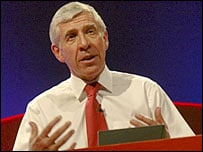
Jack Straw and the Veil

British MP Jack Straw has generated considerable controversy in the United Kingdom over recent comments critical of the niqab (face veil). He is, of course, entitled to his point of view and, as Abu Eesa has mentioned, we should welcome the opportunity to explain to non-Muslims what the niqab means. As he writes:

Islamically speaking, the majority of scholars consider the covering of the face for an adult Muslim female with the face-veil or niqāb in the presence of non-related adult males as a religiously praiseworthy action, whereas a minority considered it an obligatory act. Thus, for a Muslim woman to remove her veil in the presence of ‘foreign’ men would be considered abominable at the very least and at its most serious, totally prohibited.

Islamic Law recognizes that the niqāb can be removed for various civil needs such as that maybe suggested by Mr Straw, particularly the Hanbali school of legal thought as confirmed by the eminent Jurist Ibn Qudamah in his masterpiece al-Mughni. Muslim women have the choice in various scenarios to remove the veil for a certain need as detailed in the legal texts yet her desire to not become too friendly or involved with ‘foreign’ males shouldn’t leave at least other female members of the community in despair. Indeed, maybe one should debate the great problem that non-related men exactly have if certain Muslim women don’t wish to develop relationships with them, even in the most insignificant sense. Does one sense male insecurity here? Hurt male pride? Now that’s a thought.

However, the most concerning aspect of Straw’s commentary isn’t that he doesn’t like the veil, considers it a symbol of separation, or that he believes it hinders communication between men and Muslim women. The one aspect of all this that is, in my view, the most concerning is the admission that he asks veiled constituents attending his office to remove their veils before he will listen to them. Of course, we don’t know if he would refuse to listen to them if they didn’t remove their veils because, according to Straw, every veiled women had obliged him.

He sparked controversy when he told his local paper he asked female constituents visiting his surgery if they would uncover their faces. He said he made sure he had a female colleague in the room when asking someone to show their mouth and nose - and his constituents had so far always agreed to do so.

Given that Muslim women only cover their faces because they believe that it is religiously required or praiseworthy to do so, and not as some sort of trivial fashion statement, the fact that they all agreed to remove their veils for Straw suggests that they did so because they thought it was necessary. They did not, one can assume, take off their veils to reveal their faces with the same sense of ease as one might hang up one’s umbrella or take off one’s raincoat. Therefore, it is not unreasonable to assume there was some coercion — whether explicit or implied — at work here.

Some people have commented that Straw has the ‘right’ to demand what he pleases of those who visit him. If they don’t like it, leave. Now, this argument assumes that no contract already exists between Straw and those that seek his services. For example, it can be deployed in favour of the Muslim taxi drivers in Minneapolis that The Australian recently railed against for refusing to carry alcohol; and it could equally be applied, for example, to support the right of Christian pharmacies not to sell contraception or the right of Christian doctors to refuse to perform abortions. This is about people’s freedom to contract and the immorality of coercing people to provide goods and services against their will.

However, the relationship between an MP and his constituents is different. The reason I find this problematic is that, by being elected as an MP, the constituents — veiled and unveiled — have invested in Straw the right to represent them. He is, in a sense, their delegate and trustee who should act according to the mandate that is given to him. However, Straw is, in my view, breaching this implied contract by requiring or seeking to coerce some of his constituents to unveil before being able to avail themselves of services that he should rightfully provide them as their elected representative. It would, of course, be similarly inappropriate for a Muslim MP to require or seek to coerce constituents to veil and wear an abaya before being able to meet with him.

12 comments ↓

#1 Umar on 10.09.06 at 12:40 pm

This exact same language was once used to attack Jews for keeping kosher and the like. I do feel that some weak Muslims will shy away from this because they do not want to be seen as defending niqaab.

#2 under|progress on 10.09.06 at 5:30 pm

Jack Straw gives green light to bigotry…

In the middle of August, some Muslims wrote a letter to Blair, arguing that British foreign policy was helping extremists (which, I should add, I disagreed with). Politicians slapped this down as a ‘green light’ to terrorists, without ever engaging…

#3 Law Student on 10.09.06 at 10:55 pm

I have a concern about the Niqab/Hijab in general.

Ayah 33:59 of the Holy Quran dictates:
“O Prophet! Tell thy wives and daughters, and the believing women, that they should cast their outer garments over their persons (when abroad): that is most convenient, that they should be known (as such) and not molested…” per Yusuf Ali.

Wasn’t this verse revealed in a context where slave women used to be dressed with minimal clothing due to their social status? And that Allah commanded Muslim women be distinguished by the slave women via their dress code so that they “should be known and not molested” or per Marmaduke Pickthall: “that they may be recognised and not molested.”

Say if in todays time and context, the wearing of Hijab subjects a Muslim lady to harassment, annoyance and molesting, would it be a legitimate excuse not to wear the hijab?

#4 Umar on 10.10.06 at 6:10 am

Law Student, I do not know that it subjects Muslim women to these things. I know of non-Muslim women in NYC who wear hijab because they see it as a protection (which it is). On another note, you cannot take an ayah from the Quran as an island; you have to understand it through the context of other ayah, the Sunnah of the Prophet (sas) and, the understanding of the Sahabah, and the Arabic language.

#5 Baybers on 10.10.06 at 6:13 am

Its interesting what people crawl out of the woodwork in these “debates”, I was reading the British Muslim-baiting telegraph (always good for a laugh) and the usual suspects were at it.

example ;

patience whetcroft (self appointed Mrs “middle England”) confused and rambling narrative settles on the usual themes of “political correctness’ and ‘multiculturalism” to provide a rhetorical position in the absence of coherent argument, beyond “I don’t like it”. The problem with her position (what there is of one) is that the right to wear a veil is not a product of multiculturalism but rather an enlightenment individual freedom at the heart of the modern British nation. Indeed if multiculturalism was allowed its natural progression, the govt appointed cultural commissars in the Muslim community would trade them away in exchange for brightly coloured beads and blankets.

link: http://www.telegraph.co.uk/opi.....inion.html

we move onto Janet daley’s more sophisticated but perhaps even more absurd reasoning here:

http://www.telegraph.co.uk/opi.....inion.html

I am not sure what mob rule has to do with freedom, but Janet believes it is exactly the same thing. She can call it freedom, but it resembles North Korean “freedom” more than it represents freedom as it has traditionally been described ( ie; to be free)

the power or right to act, speak, or think as one wants without hindrance or restraint : we do have some freedom of choice | he talks of revoking some of the freedoms. See note at liberty . • absence of subjection to foreign domination or despotic government : he was a champion of Irish freedom. • the state of not being imprisoned or enslaved : the shark thrashed its way to freedom. • the state of being physically unrestricted and able to move easily : the shorts have a side split for freedom of movement. • ( freedom from) the state of not being subject to or affected by (a particular undesirable thing) : government policies to achieve freedom from want. • the power of self-determination attributed to the will; the quality of being independent of fate or necessity. • unrestricted use of something : the dog is happy having the freedom of the house when we are out. • archaic familiarity or openness in speech or behavior.

“tyranny of the majority enforced by the state’s thought police” is perhaps a better way to describe Janet Daley’s self serving convenient definition of “freedom”

perhaps the best analysis goes to the unfortunately named Alan B’stard (yeah, I’d have put an apostrophe in there too) who writes:

“I don’t know why this should cause a furore: is it any different from asking motorcycle messengers to take off their helmets when entering a bank? Further, when I was a backbencher, I always asked my comelier female supplicants to remove their apparel before we got down to business.”

http://www.telegraph.co.uk/opi.....inion.html

one can only hope that he was joking

#6 Law Student on 10.10.06 at 7:01 am

Umar,

The reason i raised this issue is because:

There are numerous verses in the Quran which were revealed for certain situations at certain times. For example, the verse which instructs the killing of the non believers does not apply for all eternity. It only applied for that one period of time when Muslims had to protect themselves from the Quraish.

In line with the above concept, it occured to me that: as the Hijab was commanded to Muslim women to prevent them from being harassed in a time when harrasment of slave girls with little clothes was common - would it be correct if Muslim women do not wear the Hijab if it serves as a platform for their harassment?

#7 Muslim Apple on 10.10.06 at 3:40 pm

Straw’s memory is a little faulty here since a niqabi sister who visted his office did comment on a BBC radio show that when he requested that she remove her niqab she declined to do so and so one can assume that there may be others who also declined.

#8 RPG on 10.10.06 at 9:29 pm

What do you guys think of this?

#9 Yusuf Smith on 10.11.06 at 12:39 am

As-Salaamu ‘alaikum,

Muslim Apple: additionally Straw’s claim that the women accepted ignores the fact that people go to see their MPs when there is a need, not just to say hello, and so they are in the position of disadvantage and may not feel in a position to refuse the request. So the claim is not valid even if it is true, which it appears that it’s not.

The type of “freedom” alluded to by Daley is pretty typical of the present government attitude towards civil liberties, namely that the greatest such liberty is security, which means that freedom from having the state looking over your shoulder can fall by the wayside (hence the road pricing scheme which entails a black box being installed in cars, monitoring their position and speed).

#10 MuslimApple on 10.11.06 at 7:40 am

Wa alaykum salaam,

Excellent point Yusuf, I just wrote a post on this very issue today. It is a very disturbing and often shocking emotional experience when people in positions of power ask, request, recommend or tell a woman to remove her veil. It’s happened to me on more than one occasion and each time it was very unpleasant.

#11 Umm Amara on 10.20.06 at 4:19 pm

Assalamualaikum
Great article. There is another excellent commentary on the whole niqab debate on the Oxford Cross Cultural Research Institute site. For those who haven’t read this site it is a Muslim think-tank set up in Oxford. Well worth a read.
http://www.occri.com/
Wassalam

#12 Amy on 06.19.07 at 8:30 am

I think it is wrong to allow a group of people to seclude themselves from society by masking their face. The veil worn in public makes it clear that ‘they don’t to be part of society’. In view of the reasons for the veil being worn ‘men are pressumed to have no control over their sexual urges and women that don’t cover are pressumed to be without dignity’ i think it’s highly immorally and offensive to all men and women, when this garment is worn. It judges all men to be sex beasts and women without dignity. No one should be given the right to discriminate against men and women in public. Nor should they be allowed to cry racist when challenged about showing their face. Racism doesn’t come into it. Racism is a lever being used to further a right to wear a garment that is a religious symbol no less. Religious beliefs of this extremeness belong in the home or places of worship where they don’t infringe on the rights of others. In addition, the veil gives out mixed messages to different people, i asked a young boy why he thought the teacher hid her face when the man came in the classroom, he replied ‘the women had done something wrong and was scared of the man’. That insight from a 9 year old boy is shocking. That said, the actions of the veiled teacher teach young girls cover up its shameful to show ones body’, it also teaches that women are submissive and that men are to be feared. These are indoctrinations we don’t want to force onto children in schools. The veiling could also cause young boys to grow up resenting women as it tells them ‘you are not worthy to share my space’.
As for the outcry in regard to jack straws request, a simple one that most of us never need to be asked ‘can i see your face’, i find it laughable that he was labelled as being racist. Eye tests require the face to be unveiled, so does dental treatment and operations? I take it that all veilers go without these things??? So are these people that offer these services also racist? I think not. When the racist card is played by veilers its nothing more than an attempt to get their own way. Where is my right to see who i am talking to? Racism has no place in this issue. This issus is about veilers wearing a uniform to identifiy their difference. I also perceive it as a display of their intolerance for people that are different to them. To allow a group of people to wear publically their beliefs over their head and face is intimidating, it also ensures they dont have to participate in society. The purpose of the veil is to cause a barrier, it does that with flying colours. I feel let down by the powers that be for allowing this divide to happen. Showing your face is respectful in uk. Helmets are removed out of respect, so are hoodies and hats. Why should a group of people be allowed to hide their face? No one elses difference offends me as they don’t hide their face and peer out from behind a veil. This is 2007, not 700. No one should be able to make others feel as if they are not worthy. Religion has too much importance in society and it’s all one sided. No one should have the right to wear a portable barrier to keep out those different to them. I do think human rights are being manipulated by veilers and that they have the upper hand. What about the rights of others that don’t hide their face? We have none. Only in the workplace can a female be prevented from veiling, as it’s sexually discriminating against men when they veil among them.
Communication problems caused by veils are another matter. Voices are muffled under a cloth. I could go on about this issue but i think the video of the teacher on u-tube makes clear the difficulty in understanding what the teacher was saying. She too had trouble understanding the questions put to her.
When veilers liken their right to veil to that of a surgeons, its laughable almost. Some other instances of masks worn are below: Bike riders helmet is worn to protect the head from injury should they crash.

Surgeons or dentists’ surgical mask
is worn to protect from blood splashes and to prevent infection. It’s also smaller and thinner and attaches around the ears. Its the surgeons/dentist duty to protect the patient and themselves from infection.

Rugby and hockey players face mask and helmet is worn to protect from injury.

Welder’s mask is worn for health and saftety reasons.

Fencer’s mask is worn to protect from injury.
Not veiling doesn’t cause the wearer health and safety issues. Veils are also not required for speech. If they were life saving, i would accept them. If the person had a skin allergy to daylight, no one would object as exposure to light can kill people with this condition.
I think all religious dress symbols should be banned from the workplace and schools, so that no one can wear anything religious. That way the rule is fair. Schools are not there to accomadate religious requests, they are there to educate children. Religion belongs in the home and in places of worship. Until this loophole is tightened up, there will not be equality among men and women. France and Turkey imposed dressing curbs, why on earth can’t the UK. On a larger scale, how do we know who we are talking too? If we can’t see them….The veil is not a religious requirement in the quran and it’s not compulory in Islam, so why is it choice here? How does one know all those that wear it, do so by choice? Given that females would be scared to speak out against their forcer.

Leave a Comment